
 202-301-8861
Washington, DC Chin Augmentation
What Is Chin Augmentation?
Chin augmentation is a surgical or non-surgical procedure that enhances chin projection to improve facial balance. By building up or repositioning the chin, the procedure brings your features into better proportion, strengthening the relationship between your chin, nose, and forehead. For patients considering chin augmentation in Washington DC, it is one of the most effective ways to address a weak lower face profile without altering other features directly.
A well-defined chin does more than complete your profile. It creates the foundation for facial balance, influencing how your nose, lips, and jawline relate to one another. When your chin appears recessed or underdeveloped, it can throw off these proportions and affect how you see yourself in photos, on video calls, and in the mirror.
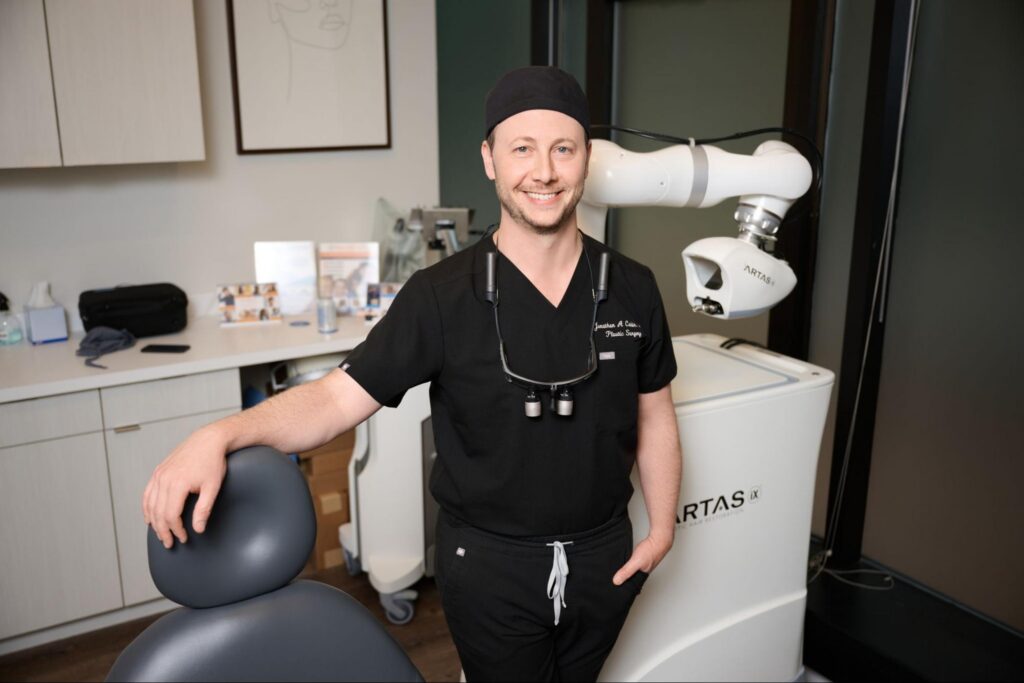
Double board-certified facial plastic surgeon Dr. Jonathan Cabin offers two primary surgical techniques at CabinMD Facial Plastics & Aesthetics in Washington, DC: chin implants (also called alloplastic augmentation) and sliding genioplasty, which repositions your natural bone. For patients seeking subtle enhancement without surgery, non-surgical chin augmentation with dermal fillers provides a temporary alternative.
Many patients find that improving chin projection brings the entire profile into harmony. This is why chin augmentation is frequently combined with rhinoplasty. When performed together, these procedures allow Dr. Cabin to refine your entire profile rather than addressing features in isolation. Patients who feel self-conscious about their side profile often notice the biggest shift in confidence after treatment.
CabinMD's advanced yet conservative approach means Dr. Cabin recommends chin augmentation only when he believes it will make a meaningful, visible difference for you.
Why Consider Chin Augmentation in Washington, DC?
Your chin anchors your lower face. When it lacks projection, other features can appear disproportionate. A weak chin may make your nose seem larger than it is, or cause your neck to look less defined. These concerns bring many Washington, DC patients to Dr. Cabin's office each year.
Chin augmentation creates a stronger, more defined jawline and profile. The results go well beyond the chin itself:
- Improved facial symmetry between your chin, nose, and forehead
- A more sculpted appearance along the jawline and neck
- Reduced appearance of a double chin caused by a recessed chin and submental fullness
- Permanent enhancement that maintains its shape over time, unlike fillers that require repeat visits
- Natural-looking results that complement your existing features rather than changing them
A balanced profile photographs well and projects strength without appearing overdone. That matters, especially in a city where professional and social impressions count.
The procedure also pairs naturally with other facial surgeries. If you're considering rhinoplasty, facelift, or neck lift, adding chin augmentation can enhance your overall outcome. Dr. Cabin evaluates your entire facial structure during your consultation to determine whether combination procedures would benefit you.
How Is Chin Augmentation Performed?
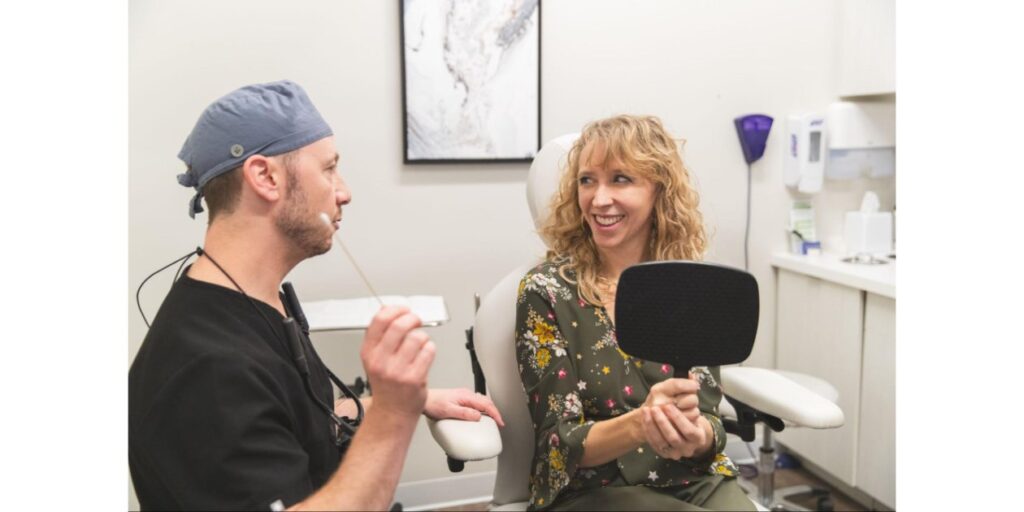
Every chin augmentation at CabinMD Facial Plastics & Aesthetics begins with a thorough consultation. Dr. Cabin, a double board-certified facial plastic surgeon, examines your facial structure, discusses your goals, and uses imaging technology to help you visualize potential outcomes. Dr. Cabin performs chin augmentation procedures at his Washington, DC surgical facility, and the result is a surgical plan built around your anatomy and expectations.
Chin Implant Procedure
Chin implants remain the most common surgical approach. The procedure typically takes one to two hours and follows these steps:
- Anesthesia administration. Most patients receive local anesthesia with sedation, though general anesthesia is available.
- Incision placement. Dr. Cabin makes a small incision either inside your mouth (along the lower gum line) or beneath your chin in a natural crease.
- Pocket creation. A precise pocket is formed in front of the chin bone.
- Implant insertion. A silicone implant sized to your facial proportions is positioned and secured.
- Closure. The incision is closed with sutures that dissolve or are removed within one to two weeks.
The intraoral approach leaves no visible scarring. When a submental (under-chin) incision is used, the scar typically fades to a thin line hidden in your natural skin crease.
Sliding Genioplasty
Some patients benefit from sliding genioplasty instead of an implant. This technique involves cutting the chin bone and repositioning it forward, backward, up, or down. It's particularly useful when you need vertical changes or significant horizontal advancement that an implant alone cannot achieve.
Dr. Cabin determines which approach suits your anatomy during your consultation at CabinMD in Washington, DC.
Chin Augmentation Recovery Timeline
Most patients return to work within seven to ten days. Here's what to expect during the healing process:
- Days 1 to 3: Swelling peaks. Discomfort is manageable with prescribed medication. Rest and elevation help.
- Week 1: You'll wear a supportive chin strap to minimize swelling and protect the surgical site.
- Days 7 to 10: Most patients feel comfortable returning to work and light social activities.
- Weeks 2 to 4: Bruising fades and swelling continues to decrease steadily.
- Months 2 to 3: Final results become apparent as residual swelling fully resolves.
Chin Implant vs. Sliding Genioplasty: A Comparison
| Feature | Chin Implant | Sliding Genioplasty |
|---|---|---|
| Method | Silicone prosthesis placed in front of bone | Chin bone is cut and repositioned |
| Direction of movement | Forward projection only | Forward, backward, up, or down |
| Reversibility | Reversible if needed | Permanent bone repositioning |
| Typical downtime and recovery | 7 to 10 days | 7 to 14 days |
| Ideal candidate | Patients needing moderate forward projection | Patients needing vertical or significant horizontal changes |
Are You a Candidate for Chin Augmentation?
Good candidates for chin augmentation are healthy adults 18 and older with a recessed chin, fully developed bone structure, and realistic expectations about outcomes. The procedure works well for those who feel their chin doesn't balance with their other features.
You may be a good fit if you have a recessed or weak chin that affects facial harmony and you're in good overall health without conditions that impair healing. Non-smokers, or those willing to quit before and after surgery, tend to heal best. Dr. Cabin also looks for patients with fully developed facial bone structure and grounded expectations about what the procedure can achieve.
- Mild to moderate chin recession that you'd like corrected permanently
- Interest in profile improvement for professional, social, or personal reasons
- A willingness to follow pre- and post-operative instructions closely
Not everyone needs surgery. Patients seeking subtle enhancement or those who want to "test drive" a stronger chin may qualify for non-surgical augmentation using dermal fillers. This approach requires no downtime and produces results lasting 12 to 18 months. It's an excellent option if you're uncertain about permanent surgical changes.
A one-on-one consultation at CabinMD Facial Plastics & Aesthetics in Washington, DC determines the best approach for your goals. Dr. Cabin examines your bone structure, skin quality, and facial proportions before recommending implants, genioplasty, or fillers. Helping you discover your best self is at the center of his practice, so he'll only recommend treatment if he believes you'll greatly and immediately benefit.
Why Choose CabinMD for Chin Augmentation in Washington, DC
Selecting the right surgeon matters as much as choosing the right procedure. Dr. Jonathan Cabin is a double board-certified facial plastic surgeon who focuses exclusively on procedures of the face and neck. This specialization means chin augmentation represents a core part of his practice, not an occasional add-on.
His credentials reflect years of dedicated training. After completing his medical education at Ivy League institutions, Dr. Cabin pursued fellowship training specifically in facial plastic and reconstructive surgery. He holds dual board certification.
This expertise shows in his technical skill across multiple techniques. Whether you need a chin implant, sliding genioplasty, or a combination approach, Dr. Cabin has the training to execute it precisely. He frequently combines chin augmentation with rhinoplasty, understanding how these procedures work together to create facial balance.
Recognition from peers and patients confirms his reputation. Dr. Cabin has received multiple Top Doctor designations and regional awards.
Expert care begins with honest, compassionate dialogue. Dr. Cabin uses advanced imaging to show you projected outcomes before you commit to surgery. This transparency helps you make confident decisions about your care. You'll know what to expect before anything moves forward.
Frequently Asked Questions About Chin Augmentation
How much does chin augmentation cost in Washington, DC?
Chin augmentation costs in Washington, DC depend on the technique, anesthesia, and whether procedures are combined. Factors that influence price include whether you choose a chin implant or sliding genioplasty, the complexity of your case, and whether chin augmentation is paired with another procedure like rhinoplasty. During your consultation at CabinMD, you'll receive a detailed quote covering surgeon fees, facility costs, and anesthesia. Patient financing options are available.
What is the difference between chin implants and sliding genioplasty?
Chin implants involve placing a silicone prosthesis in front of your existing bone to add projection and are reversible if needed. Sliding genioplasty cuts and repositions your actual chin bone, allowing movement in multiple directions. This technique suits patients who need vertical lengthening or shortening in addition to forward projection. Dr. Cabin recommends the approach that best addresses your specific anatomy.
How long does chin augmentation recovery take?
Most patients feel comfortable returning to work and social activities within seven to ten days. Initial swelling and bruising peak around day three, then steadily improve. You'll see meaningful improvement within two to three weeks, though subtle swelling may persist for two to three months. The difference is real, even in those early weeks.
Can chin augmentation be combined with rhinoplasty?
Yes. Combining these procedures is common because the chin and nose influence each other visually. A weak chin can make your nose appear larger, while a prominent chin may minimize nasal concerns. Dr. Cabin balances both features in a single surgery and recovery period when performed together.
Are chin implant results permanent?
Chin implants provide permanent enhancement. Once healed, the implant maintains its shape and position indefinitely. Unlike dermal fillers that require repeat treatments, a surgical implant is a one-time investment. In rare cases, patients choose to have implants adjusted or removed, which is possible since the procedure is technically reversible.
Schedule Your Chin Augmentation Consultation in Washington, DC
If a weak or recessed chin has kept you from feeling confident about your profile, chin augmentation can help you rediscover your true self.
Double board-certified facial plastic surgeon Dr. Jonathan Cabin welcomes you to CabinMD Facial Plastics & Aesthetics for a consultation. During your visit, he'll evaluate your facial structure, discuss your goals, and recommend the approach that fits your anatomy and lifestyle.
To find out whether chin augmentation is right for you, contact our Washington, DC office or book your appointment online. Virtual consultations are also available for patients who prefer an initial conversation from home.