
 202-301-8861
Rhinoplasty Washington DC: Nose Reshaping Explained
What Is Rhinoplasty?
Rhinoplasty is the surgical reshaping of nasal bone, cartilage, and soft tissue to change how the nose looks, how it functions, or both. Also called nose surgery, the procedure can refine a dorsal hump, narrow a bulbous tip, straighten a crooked bridge, and open a restricted airway during the same operation.
At CabinMD Facial Plastics & Aesthetics, rhinoplasty Washington DC patients are cared for by Dr. Jonathan Cabin, a double board-certified facial plastic surgeon whose practice is limited to the face and nose. That focus matters. The nose sits at the center of your face, and even a millimeter of cartilage can shift how balanced your profile appears. Dr. Cabin's advanced yet conservative approach is built around natural-looking results that still look like you.
Because the nose is both a structural airway and the most prominent feature on your face, rhinoplasty sits at the intersection of appearance and function. A plan that improves the profile without protecting the internal valves can leave you breathing worse than before, and a plan that addresses only airflow can leave the outside unchanged. The sections below walk through the techniques, approaches, and concerns that come up most often, so you arrive at your first visit already familiar with the vocabulary Dr. Cabin will use.
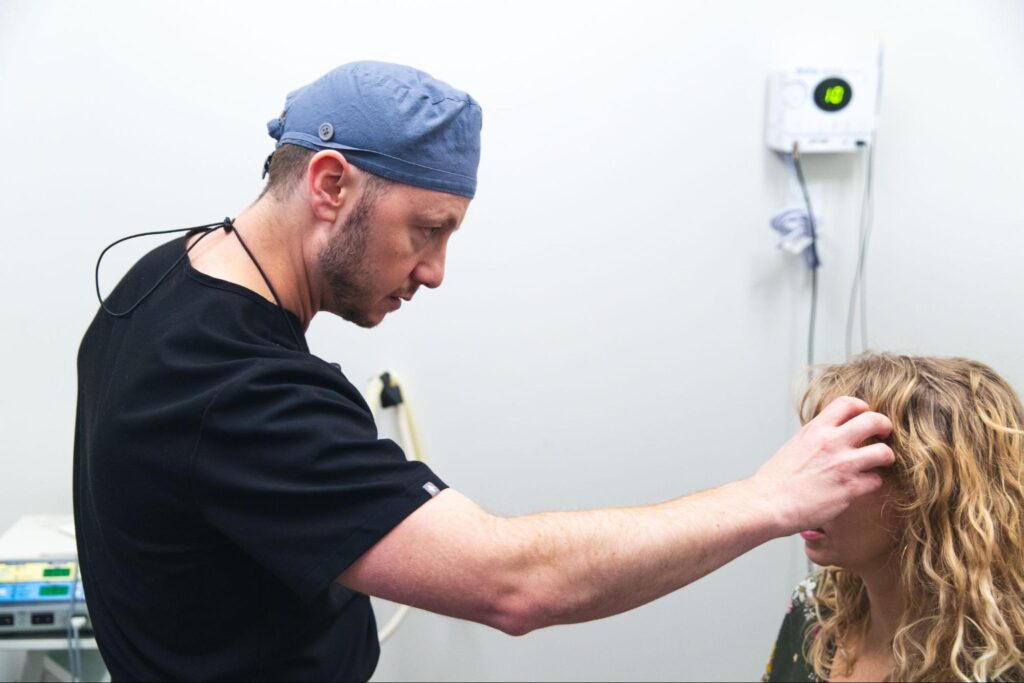
Types of Rhinoplasty Dr. Cabin Performs
No two noses are structured the same way, so the technique is chosen to fit your anatomy rather than the other way around.
- Primary rhinoplasty: A first-time cosmetic or functional nose surgery, planned around your existing bone and cartilage framework.
- Revision rhinoplasty: Correction after a previous rhinoplasty performed elsewhere, often involving scar tissue, weakened support, or cartilage grafting to rebuild structure.
- Ultrasonic (piezo) rhinoplasty: Uses piezoelectric instruments to sculpt nasal bone with precision while sparing the soft tissue around it.
- Ethnic and preservation rhinoplasty: Refines the nose while intentionally preserving the features that connect you to your heritage and your family.
- Functional rhinoplasty and septoplasty: Straightens a deviated septum, repairs collapsed nasal valves, and reopens obstructed airways.
- Reconstructive rhinoplasty: Restores nasal shape and airflow after trauma, sports injury, or skin cancer removal.
- Non-surgical (liquid) rhinoplasty: Uses injectable filler to camouflage small contour irregularities without an incision.
Open vs. Closed Rhinoplasty: How They Compare
Closed rhinoplasty involves incisions made strictly within the nostrils, leaving no visible scars. Open rhinoplasty uses those same incisions plus a small skin incision on the columella, the strip of tissue between your nostrils, which gives your surgeon direct visibility of the nasal framework.
In short: closed rhinoplasty hides every incision inside the nostrils and suits smaller, well-defined changes, while open rhinoplasty adds one small external incision that gives Dr. Cabin a direct view of the cartilage framework. That direct view matters most for complex tip work, structural grafting, significant asymmetry, and revision cases.
| Closed Rhinoplasty | Open Rhinoplasty | |
|---|---|---|
| Incisions | Entirely inside the nostrils | Inside the nostrils plus a small columellar incision |
| Visible scarring | None | A fine line under the nose that typically fades well |
| Surgical access | Limited, indirect view of cartilage | Direct, unobstructed view of the entire framework |
| Swelling | Generally less, often resolves sooner | Generally more, particularly at the tip |
| Typical duration | Shorter operative time | Longer operative time |
| Best suited for | Smaller, well-defined changes such as a modest hump or minor tip work | Complex tip reshaping, significant asymmetry, structural grafting, and most revision cases |
Neither option is universally better. Dr. Cabin recommends one over the other based on what your nose actually needs, and he'll explain the reasoning during your consultation rather than handing you a decision without context.
What Is Ultrasonic Rhinoplasty?
Traditional bone reshaping relies on manual osteotomes, essentially a fine chisel and mallet, to fracture and reposition nasal bone. Ultrasonic rhinoplasty replaces that step with piezoelectric instruments that vibrate at high frequency. These instruments cut and sculpt bone while leaving nearby soft tissue, blood vessels, and cartilage largely undisturbed.
The practical difference for you shows up in three places:
- Precision. Bone can be shaved, rasped, and contoured in small increments instead of fractured along a predicted line.
- Less bruising. Because surrounding tissue is spared, many patients see less periorbital bruising in the first week.
- Earlier refinement. Reduced trauma often means the shape underneath the swelling becomes recognizable sooner.
Ultrasonic instrumentation is one of the technologies used at CabinMD Facial Plastics & Aesthetics, though it isn't necessary for every case. Noses that need mostly tip work, for example, may not require bone sculpting at all.
Liquid Rhinoplasty as a Temporary Alternative
Liquid rhinoplasty in Washington, DC has become a common in-office option. Using hyaluronic acid filler, Dr. Cabin can smooth a small dorsal hump, lift a slightly drooping tip, or balance minor contour irregularities in a single appointment with minimal downtime and recovery.
It has real limits. Filler adds volume, so it can camouflage a bump but cannot make a large nose smaller, narrow the bony base, or improve breathing. Results are temporary and require maintenance. For patients who want a preview of a straighter profile before committing to a personalized treatment plan, though, it can be a reasonable first step.
Cosmetic and Functional Concerns Rhinoplasty Addresses
Beauty relates more to the interaction among your various facial features than to individual features themselves. When one feature appears disproportionate to the rest of the face, it can become all you see when you look in the mirror. Rhinoplasty commonly addresses:
- A dorsal hump or bump along the bridge
- A bulbous, boxy, or poorly defined tip
- A tip that droops, especially when you smile
- Wide nostrils or excessive nostril show
- A crooked or deviated nose, often after an old injury
- Asymmetry between the two sides of the nose
- A nose that appears too large or too small relative to the chin and midface
- Chronic nasal obstruction, congestion, or difficulty breathing through one side
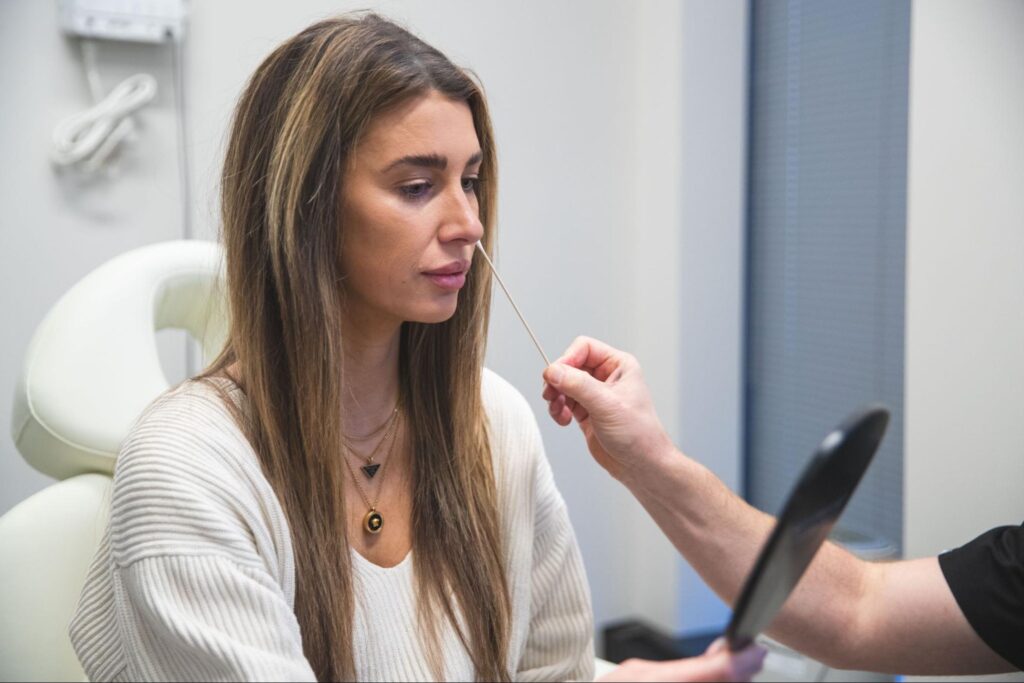
Benefits of Rhinoplasty at CabinMD Facial Plastics
Rhinoplasty done well doesn't announce itself. The goal isn't a new nose that draws attention, it's a nose that finally stops competing with your eyes and smile for it.
Here's what patients gain from nose surgery at CabinMD Facial Plastics & Aesthetics in Washington, DC:
- Facial balance rather than a template. Dr. Cabin plans your nose in relation to your chin projection, brow position, midface width, and lip proportions. A profile that looks harmonious on one patient can look imbalanced on another, which is why measurements are individualized instead of borrowed from a photo.
- Better breathing when function is addressed at the same time. If a deviated septum or nasal valve collapse is contributing to your congestion, that work can often be performed during the same surgery. One anesthesia. One recovery period. Two problems solved.
- Natural, undetectable outcomes. Dr. Cabin is known for minimally invasive procedures and natural-looking results, and his aesthetic philosophy leans toward refinement over reinvention. Ethnic and family identity are preserved deliberately, not incidentally.
- Lasting structural change. Unlike filler, which reabsorbs over time, surgical rhinoplasty alters the underlying bone and cartilage. Aging continues, as it does everywhere on the face, but the structural correction itself is lasting.
- Precision from ultrasonic technique. Piezoelectric bone sculpting allows for controlled, incremental shaping of the bridge, often with less bruising than manual fracture techniques.
- Everyday confidence in ordinary moments. Patients frequently mention the small things first: being comfortable in profile photos, glasses that finally sit level, no longer angling away from a camera at a wedding or a work event.
- Airway improvement that affects sleep and exercise. Patients with long-standing obstruction often report easier nasal breathing during workouts and less mouth-breathing at night once swelling subsides.
Dr. Cabin's primary goal is to provide his patients with treatments that lead to precise, natural cosmetic results. Helping you discover your best self is at the center of his practice, so he will only recommend treatment if he feels you'll greatly and immediately benefit.
The Rhinoplasty Process: Consultation to Final Result
Rhinoplasty typically takes two to four hours, is performed under general anesthesia at an accredited surgical facility, and is done on an outpatient basis so you go home the same day. Your external cast comes off around day seven, most patients return to desk work by week two, and the nose continues refining for roughly twelve months.
Step 1: Your Consultation and Imaging
Expert care begins with honest, compassionate dialogue. Your first visit includes a physical examination of the nasal airway, internal valves, and septum, along with an assessment of your skin thickness, cartilage strength, and existing asymmetries.
Standardized photographs are taken from multiple angles, and 3D simulation is used to show possible changes in profile and frontal view. Dr. Cabin will tell you clearly which goals are achievable with your anatomy and which are not. Thick skin, for instance, holds swelling longer and limits how much tip definition is realistic. That's the kind of honest conversation you should expect.
Step 2: Your Surgical Plan
After the consultation, Dr. Cabin builds a written surgical plan specific to your nose: open or closed approach, whether ultrasonic instrumentation will be used, whether cartilage grafts are needed, and whether functional work will be performed alongside cosmetic reshaping. You'll also receive pre-operative instructions covering medications to stop, supplements to avoid, and how to prepare your home for the first week.
Step 3: The Day of Surgery
Rhinoplasty is performed under general anesthesia administered by a board-certified anesthesiologist at an accredited surgical facility in the Washington, DC area. Most procedures run two to four hours, with revision and structural grafting cases running longer. You'll wake up with a small external cast, sometimes internal splints, and a gauze drip pad under your nose. Nasal packing is used less often today than it once was.
Step 4: Cast Removal and Early Healing
Your cast and any internal splints are typically removed at the one-week visit. This is the first time you'll see your new shape, and it will be swollen. Almost every patient's nose looks wider and less defined at cast removal than it will at three months.
Step 5: Follow-Up Through the Full Healing Arc
Follow-up visits are scheduled at approximately one month, three months, six months, and twelve months. This long-term follow-up protocol allows Dr. Cabin to track swelling resolution, monitor breathing, and document your outcome with standardized photography at each stage.
Rhinoplasty Recovery Timeline
| Time Frame | What to Expect |
|---|---|
| Days 1-3 | Cast in place, congestion, swelling and bruising peak, rest with head elevated |
| Days 4-7 | Bruising begins to fade, discomfort is usually mild and manageable |
| Week 1 | Cast and splints removed, initial shape visible but swollen |
| Week 2 | Most patients return to desk work and light social activity |
| Weeks 3-4 | Visible bruising typically resolved, light walking encouraged |
| Weeks 4-6 | Cleared for exercise and cardio, contact sports still restricted |
| Months 2-3 | Most of the swelling has resolved, shape becomes recognizable |
| Months 6-12 | Tip definition continues refining, final result settles |
Revision rhinoplasty and thick-skinned noses generally sit at the longer end of every stage in this table.
Discomfort, Bruising, and Aftercare
Rhinoplasty is generally well-tolerated with the help of anesthesia during the procedure and pain medication afterward. Patients usually experience discomfort rather than pain, with most describing it as congestion or pressure similar to a bad head cold. Bruising around the eyes is common and typically fades within two weeks.
Aftercare instructions cover the essentials:
- Sleep with your head elevated for the first one to two weeks
- Use saline spray and gentle cleaning of the nostrils as directed
- No nose blowing until cleared
- No glasses resting on the bridge until Dr. Cabin approves
- Strict sun protection over the nose during healing
- No heavy lifting or strenuous exercise for four to six weeks
Rhinoplasty Cost Factors in Washington, DC
The cost of rhinoplasty varies based on the surgeon's experience, the complexity of the procedure, and geographical location. Several factors influence your quote:
- Primary vs. revision: Revision cases require more operative time and often cartilage grafting, which increases cost.
- Technique: Ultrasonic instrumentation and structural grafting add complexity.
- Anesthesia and facility fees: These are billed separately from the surgeon's fee.
- Functional component: Septoplasty or nasal valve repair performed for documented breathing obstruction may be partially covered by insurance, while the cosmetic portion is not.
Discuss all fees, including anesthesia and facility costs, during your consultation with Dr. Cabin, where your quote is itemized line by line so nothing arrives as a surprise later. Because every nose is planned individually, an accurate figure depends on the operative time your case requires and on whether grafting or airway work is part of the plan. If your surgery includes a functional component, the practice will also explain how the insurance and self-pay portions are separated before you schedule. Patient financing is available for those who prefer to spread payments over time.
Are You a Good Candidate for Rhinoplasty?
Good rhinoplasty candidates have completed facial growth, are in stable general health, don't smoke, and hold realistic expectations about what surgery can change. Beyond those basics, candidacy depends on which problem you're trying to solve, since cosmetic, functional, and revision patients each require a different evaluation.
Ideal Candidate Checklist
- Facial growth is complete, generally around age 15 to 17 and older, with timing individualized
- Non-smoker, or willing to stop well in advance of and after surgery
- No uncontrolled medical conditions that complicate anesthesia or healing
- Specific concerns you can articulate, rather than a general wish to look different
- Understanding that healing unfolds over twelve months, not twelve days
- Willingness to follow aftercare instructions closely
Candidates for Revision Rhinoplasty
Revision is considered when a previous rhinoplasty left you with a shape you don't want, a breathing problem you didn't have before, visible asymmetry, or an over-resected bridge or tip. Timing matters: Dr. Cabin generally recommends waiting at least twelve months after the original surgery so tissues can fully settle before reoperating. Revision work is technically demanding and often requires cartilage grafting from the septum, ear, or rib to rebuild lost support.
Candidates for Ethnic and Preservation Rhinoplasty
If you want refinement without erasing the features that reflect your heritage, this is the right conversation to have. Preservation techniques maintain the natural dorsal line rather than removing and rebuilding it, and ethnic rhinoplasty planning accounts for differences in skin thickness, cartilage strength, and nasal base width. Your goals drive the plan.
Candidates for Functional Rhinoplasty
You may benefit from functional nasal surgery if you experience:
- Chronic congestion that doesn't respond to allergy medication
- A deviated septum diagnosed on examination
- Nasal valve collapse, where the sidewall pulls inward when you inhale
- Obstruction following an old injury or broken nose
- Persistent mouth-breathing or disrupted sleep from nasal blockage
Who Should Wait
Rhinoplasty isn't appropriate for everyone at every moment. Surgery should be postponed with an active skin infection at the surgical site, uncontrolled diabetes, hypertension, or bleeding disorders, during pregnancy or breastfeeding, or when body dysmorphic concerns are present. In that last case, honest, compassionate dialogue and referral to appropriate support serves you far better than an operation.
Alternatives Worth Considering
- Liquid rhinoplasty: Temporary filler correction of small contour issues, no downtime
- Chin augmentation: Sometimes a recessed chin, not the nose, is what makes a profile look unbalanced
- Septoplasty alone: When breathing is the only concern and no external change is wanted
- Watchful waiting: For younger patients whose facial growth isn't yet complete
Why Patients Choose CabinMD for Rhinoplasty in Washington, DC
Choosing a rhinoplasty surgeon is different from choosing a surgeon for most other procedures. The margin for error is measured in millimeters, and the result is visible in every photograph you take for the rest of your life.
Double board-certified with a facial-only practice. Dr. Jonathan Cabin is double board-certified, including certification by the American Board of Facial Plastic and Reconstructive Surgery (ABFPRS). His practice at CabinMD Facial Plastics & Aesthetics is limited to the face and nose, so rhinoplasty is a core specialty rather than one item on a long surgical menu.
Ivy League training. Dr. Cabin completed his training at Yale, Columbia, and Penn, and he draws on that background along with subspecialty fellowship experience in facial plastic and reconstructive surgery. He is also internationally recognized in the field.
Recognition from peers and the community. Dr. Cabin has been named a Castle Connolly Top Doctor in 2022, 2023, and 2024, recognized in Arlington Magazine Best of 2024, and honored with Best of the City - Washington awards, including the Best of the City - Washington 2025 Winner distinction.
Both sides of the nose, addressed together. Cosmetic reshaping and functional airway correction are planned as one operation when appropriate. A nose that looks balanced but breathes poorly isn't a successful outcome.
A gallery you can actually study. The before-and-after gallery includes primary, revision, ethnic, and functional cases photographed under standardized conditions, so you can evaluate real outcomes rather than marketing images. Pay particular attention to patients whose starting anatomy resembles yours, since skin thickness, bridge height, tip shape, and chin projection all influence what a result looks like at the twelve-month mark. Dr. Cabin will review relevant cases with you during your consultation and point out where a photographed outcome does or doesn't translate to your nose. Real patient testimonials with first names and last initials, along with video patient testimonials, are also available.
Advanced techniques applied selectively. Ultrasonic piezo instrumentation, preservation rhinoplasty, and cartilage grafting are all part of Dr. Cabin's toolkit. Which ones apply to you depends on your anatomy, and he'll tell you plainly when a technique isn't needed.
Follow-up through the full twelve-month arc. Rhinoplasty results aren't final at the cast removal appointment. Structured follow-up at one, three, six, and twelve months means someone is watching your healing the entire time.
Convenient for the greater DC region. The office at 2440 M St. NW, Suite 320 in Washington, DC serves patients from across the District, Arlington and Northern Virginia, and nearby Maryland communities. Patients searching for rhinoplasty near me or the best rhinoplasty surgeon in Virginia frequently travel a short distance into the city for care here.

Rhinoplasty FAQs
How much does rhinoplasty cost in Washington, DC?
Rhinoplasty cost in Washington, DC depends on the surgeon's experience, the complexity of your case, and whether functional work is included. Your total generally combines three separate line items: the surgeon's fee, the anesthesia fee, and the surgical facility fee. Revision rhinoplasty typically costs more than primary rhinoplasty because it requires longer operative time and often cartilage grafting. You'll receive an itemized quote at your consultation, and patient financing is available. Because operative time, grafting needs, and airway work vary so widely from one patient to the next, a meaningful number can only be given after Dr. Cabin has examined your nose and built your surgical plan.
How long is rhinoplasty recovery, and when can I return to work?
Most patients return to desk work about two weeks after rhinoplasty, once the cast is off and visible bruising has faded. The first week is the most restrictive: expect congestion, swelling, and the external cast. Exercise and cardio are usually cleared at four to six weeks, with contact sports restricted longer. The nose continues refining subtly for roughly twelve months, and revision cases take longer.
Does insurance cover rhinoplasty or septoplasty?
Insurance typically does not cover cosmetic rhinoplasty, but it may cover septoplasty or nasal valve repair when there's documented breathing obstruction that hasn't improved with medical management. When cosmetic and functional work are combined in one surgery, the functional portion may be billed to insurance while the cosmetic portion remains your responsibility. Coverage varies by plan, so verification and prior authorization are handled before your surgery date.
Will rhinoplasty change my breathing or my voice?
Rhinoplasty performed with attention to the internal airway usually maintains or improves breathing, and functional rhinoplasty is specifically designed to open obstructed airways. Purely cosmetic reduction performed without structural support can narrow the airway, which is one reason technique and surgeon selection matter so much. Voice changes are uncommon. Some patients notice a slight difference in nasal resonance during the swelling phase, which resolves as healing progresses.
What is the difference between ultrasonic and traditional rhinoplasty?
Ultrasonic rhinoplasty uses piezoelectric instruments that vibrate at high frequency to shave and sculpt nasal bone, while traditional technique uses a manual osteotome to fracture and reposition it. Because piezo instruments cut bone while largely sparing surrounding soft tissue and blood vessels, many patients experience less bruising in the early recovery period. Ultrasonic technique also allows more incremental control over the bridge. Not every rhinoplasty requires bone work, so the technique is matched to the case.
How long do rhinoplasty results last, and when will swelling fully resolve?
Rhinoplasty results are long-lasting because the procedure changes underlying bone and cartilage rather than adding temporary volume. Most swelling resolves within the first two to three months, but the nasal tip is the last area to settle and can take a full twelve months, sometimes longer in thick-skinned or revision patients. Your nose will continue to age naturally over the decades, as the rest of your face does, though the structural correction itself remains.
Can I get liquid rhinoplasty instead of surgery?
Liquid rhinoplasty in Washington, DC is a reasonable option for camouflaging a small dorsal hump, adding modest tip projection, or smoothing a minor contour irregularity. It's performed in-office with minimal downtime and recovery. Filler adds volume rather than removing it, so it cannot reduce nasal size, narrow the bony base, or improve airflow. Results are temporary and require periodic maintenance to sustain.
Schedule Your Rhinoplasty Consultation in Washington, DC
Rediscover your true self with a rhinoplasty consultation built around your anatomy, your goals, and an honest discussion of what surgery can and can't achieve. Your consultation with Dr. Cabin includes a nasal airway examination, standardized photography, and 3D imaging so you can see potential changes to your profile before committing to anything.
There's no obligation. You'll leave with a clear understanding of your options, whether that's a surgical plan, a non-surgical alternative, or a recommendation to wait.
Three ways to get started:
- Call the office at 202-301-8861
- Book online at https://cabinmd.com/book-appointment/
- Submit a consultation request through the contact form
CabinMD Facial Plastics & Aesthetics is located at 2440 M St. NW, Suite 320, Washington, DC 20037, welcoming patients from throughout the District, Arlington and Northern Virginia, and neighboring Maryland communities.
Expert care, exceptional results, designed for you.