
 202-301-8861
Brow Lift Washington, DC
A brow lift is a surgical procedure that raises the brow and forehead to correct heaviness, hooding, and deep creases. Brow lift Washington, DC patients typically choose it to restore a rested, alert eye shape. Dr. Jonathan Cabin performs the procedure as an outpatient treatment under sedation or general anesthesia.
What Is a Brow Lift?
With age, forehead tissue gradually settles downward. The outer third of the brow tends to drop first, which crowds the upper eyelid and creates a fold of skin that rests on the lash line. That single change can make you look tired, stern, or even angry when you feel anything but. Many people compensate without realizing it, raising the forehead muscle all day long to keep the visual field clear, which etches horizontal lines deeper over time.
A brow lift addresses the cause rather than the surface. By repositioning the brow and releasing the muscles that pull it down, the procedure restores the brow to a position that suits your face and softens the creases that formed from years of overcompensating.
Dr. Cabin performs several brow lift techniques, and the right one depends on your anatomy, your hairline, and how much lift you actually need:
- Endoscopic brow lift. Small scalp incisions allow a tiny camera and instruments to release and reposition the brow and forehead.
- Temporal (lateral) brow lift. Incisions within the temporal hairline lift the outer brow when only that area needs support.
- Hairline (trichophytic) brow lift. An incision at the frontal hairline, often chosen for a high forehead, since it lifts the brow without moving the hairline back.
- Direct brow lift. Performed just above the brow hair, usually reserved for significant descent or facial nerve weakness.
Brow Lift vs. Upper Blepharoplasty
These two procedures are frequently confused because both open up the eye area. Upper blepharoplasty removes excess skin from the eyelid itself. A brow lift raises the structure sitting above the eyelid. When the true problem is a low brow and only the eyelid skin is removed, the brow can end up looking heavier still, which is why careful analysis at your first visit matters. In many cases, Dr. Cabin recommends combining both, treating the brow position and the eyelid skin together for balanced, natural-looking results.
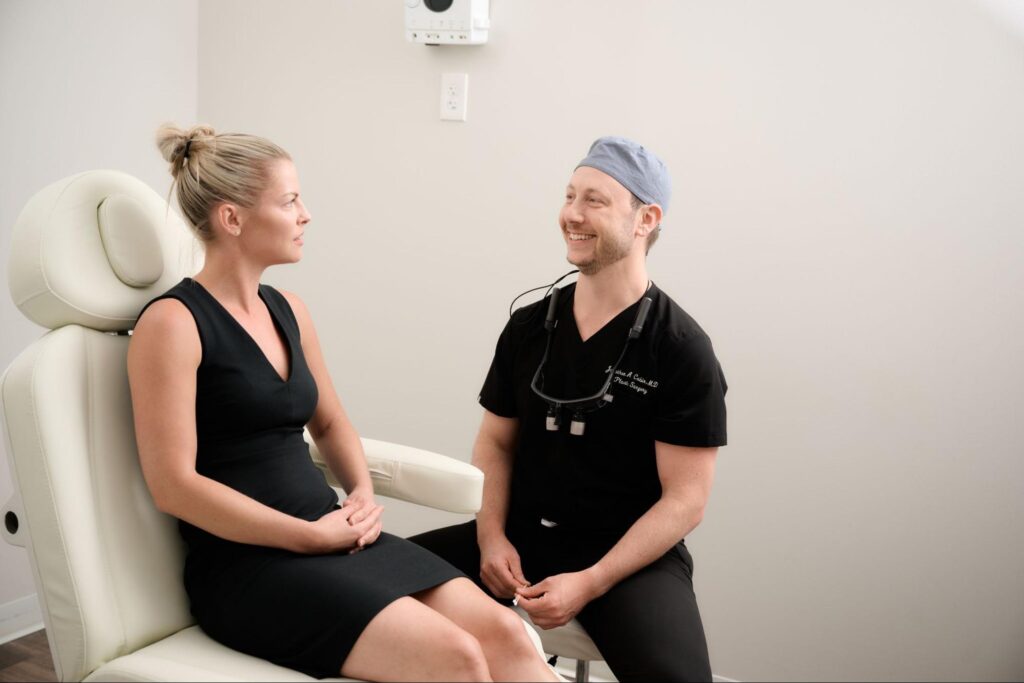
Brow lift surgery is performed as an outpatient procedure under sedation or general anesthesia, and you go home the same day. At CabinMD Facial Plastics & Aesthetics in Washington, DC, every procedure Dr. Cabin performs is limited to the face, head, and neck, which is what allows for the level of detail this kind of work requires.
What Are the Benefits of a Brow Lift?
A brow lift restores brow position, opens the eye area, softens forehead and frown lines, and reduces the need for repeated injectable treatments. Results are long-lasting, and incisions are placed within the hairline or scalp so healing stays discreet. Most Washington, DC patients return to desk work within one to two weeks.
Here's what a well-planned brow lift can do:
- Lifts heavy, hooded brows. Repositioning the brow removes the fold of tissue crowding the upper lid and restores a rested, alert eye shape.
- Softens forehead lines at the source. When your forehead muscle no longer has to work overtime to hold the brow up, horizontal lines relax rather than deepen.
- Improves glabellar (frown) creases. Releasing the muscles between the brows addresses the vertical "11" lines that injectables only temporarily mask.
- Reduces reliance on neurotoxin. Many patients find they need far fewer treatments for brow position afterward, though most still enjoy occasional injectables for fine lines.
- Lasts for years, not months. Brow lift results typically hold for seven to ten years or longer, with natural aging continuing gradually from a better starting point.
- Heals discreetly. Incisions are small and camouflaged within the scalp or at the hairline, hidden by hair as healing progresses.
- Balances the whole upper face. A brow that sits at the right height changes how the eyes, forehead, and lids relate to one another, which is where genuine facial harmony comes from.
One thing worth being clear about: a brow lift does not change your eyes. It changes the frame around them. That distinction is central to Dr. Cabin's advanced yet conservative approach, which favors the smallest intervention that produces the result you're after.
How the Brow Lift Procedure Works, Step by Step
A brow lift generally takes one to two hours and follows six stages: consultation and facial analysis, surgical planning, anesthesia, hidden incisions, repositioning of the brow and forehead tissue, and closure. The procedure is outpatient, so you return home the same day. Most swelling and bruising resolve within one to two weeks.
The Six Steps
- Consultation and facial analysis. Dr. Cabin evaluates brow height and shape, eyelid skin, forehead height, hairline position, and how your muscles move when you speak and express. Standardized photos are taken for planning.
- Surgical planning. Technique selection follows anatomy, not habit. Your hairline position, brow asymmetry, and forehead height determine where incisions go and how much lift is appropriate.
- Anesthesia. The procedure is performed under sedation or general anesthesia in an accredited outpatient surgical setting, with monitoring throughout.
- Incisions. Depending on technique, incisions are placed within the scalp, in the temporal hairline, or along the frontal hairline. Each is planned to sit where hair will cover it.
- Release and repositioning. The forehead tissue is released from the underlying bone, the depressor muscles that pull the brow downward are addressed, and the brow is secured at its new position.
- Closure and recovery. Incisions are closed with sutures or small fixation devices, a light dressing is applied, and you're discharged the same day with written aftercare instructions and follow-up scheduled.
Comparing Brow Lift Techniques
| Technique | Incision | Best For | Typical Downtime |
|---|---|---|---|
| Endoscopic | Several short incisions hidden in the scalp | Overall brow descent, deep forehead and frown lines, average forehead height | 7-14 days |
| Temporal (lateral) | Small incisions within the temporal hairline | Outer brow hooding only, milder descent, patients wanting subtle change | 5-10 days |
| Hairline (trichophytic) | Along the frontal hairline | High forehead, when raising the hairline further would look unbalanced | 10-14 days |
| Direct | Just above the brow hair | Significant descent, facial nerve weakness, select older patients | 7-10 days |
Recovery Week by Week
- Days 1-3. Swelling and bruising peak, and you can expect tightness across the forehead along with some numbness in the scalp. Keep your head elevated, use cold compresses, and give yourself permission to rest.
- Days 4-7. Bruising begins to fade and shifts downward. Most patients describe this stage as discomfort rather than pain, well managed with prescribed medication.
- Around day 7. Sutures or staples are typically removed at your follow-up visit.
- Days 7-14. Most patients feel comfortable returning to desk work and light social activity, and any residual swelling is usually easy to conceal.
- Weeks 3-6. Exercise is gradually reintroduced with Dr. Cabin's clearance. Scalp numbness and itching resolve steadily.
- Months 3-6. Final results settle as the last swelling resolves and the brow relaxes into its long-term position.
What Affects Brow Lift Cost in Washington, DC
Fees vary based on the technique selected, the type of anesthesia used, facility fees, the complexity of your anatomy, and whether the procedure is combined with blepharoplasty or a facelift. Combining procedures under a single anesthesia often costs less than staging them separately. You'll receive an itemized quote at your consultation, and patient financing is available.
Are You a Good Candidate for a Brow Lift?
Good candidates for a brow lift have visible brow descent, upper-lid hooding caused by the brow rather than the eyelid, or deep forehead and frown lines. Ideal patients are healthy adults in stable general health with reasonable expectations about what facial plastics & aesthetics can accomplish. Dr. Cabin confirms candidacy through in-person facial analysis at your Washington, DC consultation.
Candidate Checklist
- Healthy adults, generally from the late thirties onward, though age matters less than anatomy
- Non-smokers, or willing to stop well before and after the procedure
- Stable weight and controlled blood pressure
- Reasonable skin quality and elasticity
- Clear, specific goals and realistic expectations about outcome and recovery
- No active infection near the surgical area
A Simple Test You Can Do at Home
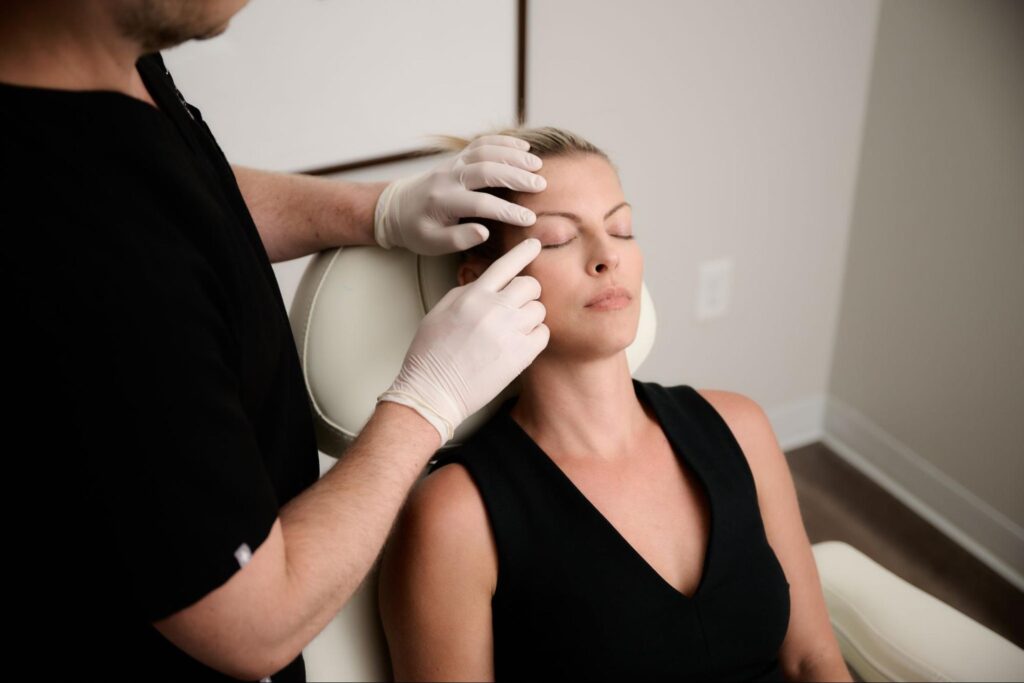
Stand in front of a mirror with your face relaxed. Place a fingertip just above the outer end of one eyebrow and lift gently upward and slightly outward, no more than a few millimeters. If the eyelid looks noticeably more open and the eye appears more rested, a brow lift is likely part of the answer. If lifting the brow changes very little and the excess skin sits on the lid itself, upper blepharoplasty may be the better plan.
When Blepharoplasty, Combination, or Waiting Makes More Sense
Eyelid surgery alone works well when brow position is normal and the concern is genuinely extra eyelid skin. A combined brow lift and blepharoplasty suits patients with both a descended brow and redundant lid skin, and treating them together tends to produce a more balanced upper face than either procedure alone. Some patients are better served by waiting: those with active infection, uncontrolled medical conditions, recent significant weight change, or expectations that surgery can't reasonably meet.
Your first visit at CabinMD Facial Plastics & Aesthetics includes photo analysis, careful hairline assessment, a discussion of brow shape preference (a subtle detail that varies considerably from patient to patient), and an honest, compassionate dialogue about which technique fits.

Why Washington, DC Patients Choose CabinMD Facial Plastics & Aesthetics
Dr. Jonathan Cabin is a double board-certified facial plastic surgeon whose practice is limited entirely to the face, head, and neck. He completed Ivy League training at Yale, Columbia, and Penn, and holds certification from the American Board of Facial Plastic and Reconstructive Surgery (ABFPRS). Brow lift, blepharoplasty, and facelift surgery are performed regularly within this focused surgical practice.
Recognition from peers and the community includes:
- Castle Connolly Top Doctor, 2022, 2023, and 2024
- Best of the City, Washington
- Best of the City, Washington, 2025 Winner
- Arlington Magazine Best of 2024
What tends to matter most to patients, though, is what the work looks like afterward. Dr. Cabin plans incisions to preserve your hairline rather than push it backward, and he sets brow position conservatively, because an over-lifted brow is far more noticeable than an under-treated one. The goal is an upper face that reads as rested, not operated on. You can review the before-and-after gallery and patient testimonials to see how that philosophy plays out across different faces and ages.
Surgery is performed in an accredited outpatient surgical facility, with a structured follow-up protocol that begins in the first week and continues as your result settles over the following months. Patients travel to the Washington, DC office from across the District, Maryland, and Northern Virginia, including Arlington, and each consultation is built around your face and your goals rather than a standard package. That standard is the one behind every visit here: Expert care, exceptional results, designed for you.
Brow Lift Washington, DC FAQs
How much does a brow lift cost in Washington, DC?
Brow lift cost depends on the technique used, anesthesia type, facility fees, and whether the procedure is combined with eyelid surgery or a facelift. Combining procedures under one anesthesia usually reduces the total compared with separate operations. At your consultation with Dr. Cabin, you'll receive a written, itemized quote covering all fees, and patient financing options are available.
How long does a brow lift last?
Most patients enjoy their brow lift results for roughly seven to ten years or longer. The procedure doesn't stop aging, but it resets brow position, so any future descent starts from a better place. Sun protection, not smoking, and stable weight all help the result hold longer. Regular follow-up visits also give Dr. Cabin the chance to track how your result is settling over time and to suggest maintenance only when it genuinely adds something.
Is a brow lift painful, and what does recovery look like?
Most patients describe the experience as discomfort rather than pain, usually a sensation of tightness and pressure across the forehead along with scalp numbness. Prescribed medication handles the first several days comfortably. Bruising and swelling peak within the first three days, sutures typically come out around one week, and most people are back at desk work within seven to fourteen days. Written aftercare instructions go home with you, so you always know what to expect next.
Will a brow lift leave visible scars or change my hairline?
Incisions are placed within the scalp or along the hairline, where hair conceals them as healing progresses. Scalp incisions generally become difficult to detect. Hairline position is a real planning consideration, and if your forehead is already tall, Dr. Cabin will typically recommend a hairline (trichophytic) approach specifically so the hairline isn't pushed further back.
Brow lift vs. Botox: what's the difference?
Neurotoxin injections relax the muscles that pull the brow downward, which can produce a modest lift lasting a few months. A brow lift physically repositions the brow and forehead tissue, with results measured in years. Injectables are a reasonable option for early or mild brow heaviness; surgery becomes the better choice when hooding obstructs the lid, when injectables no longer produce enough change, or when deep creases have set into the skin.
Can a brow lift be combined with eyelid surgery or a facelift?
Yes, and combining is common. Brow lift with upper blepharoplasty is one of the most frequently paired sets of procedures, since together they address both brow position and eyelid skin. Brow lift is also routinely combined with facelift or neck lift for patients treating the full face at once. Combining under a single anesthesia means one recovery period instead of two, and Dr. Cabin will walk you through whether staging or combining makes more sense for your anatomy and your schedule.
When can I exercise or fly after a brow lift?
Light walking starts within a few days. Most patients resume moderate exercise around three to four weeks and full-intensity training, including heavy lifting, closer to six weeks, always with Dr. Cabin's clearance. Air travel is generally reserved until after your one-week follow-up, though timing depends on your individual healing.
Schedule Your Brow Lift Consultation in Washington, DC
If your brow feels heavy, your upper lids look crowded, or your forehead lines have deepened past what injectables can soften, a consultation is the practical next step. Dr. Jonathan Cabin will examine your brow position, eyelid skin, and hairline, walk you through which technique suits your anatomy, and provide an itemized quote so there are no surprises. You'll also see relevant cases from the before-and-after gallery.
Call CabinMD Facial Plastics & Aesthetics at 202-301-8861 or request your consultation online. Virtual consultations may be available for out-of-area patients.
Our Washington, DC office at 2440 M St. NW, Suite 320, welcomes patients from across the District, Arlington, Northern Virginia, and Maryland. Rediscover your true self, with a brow that finally matches how you feel.